
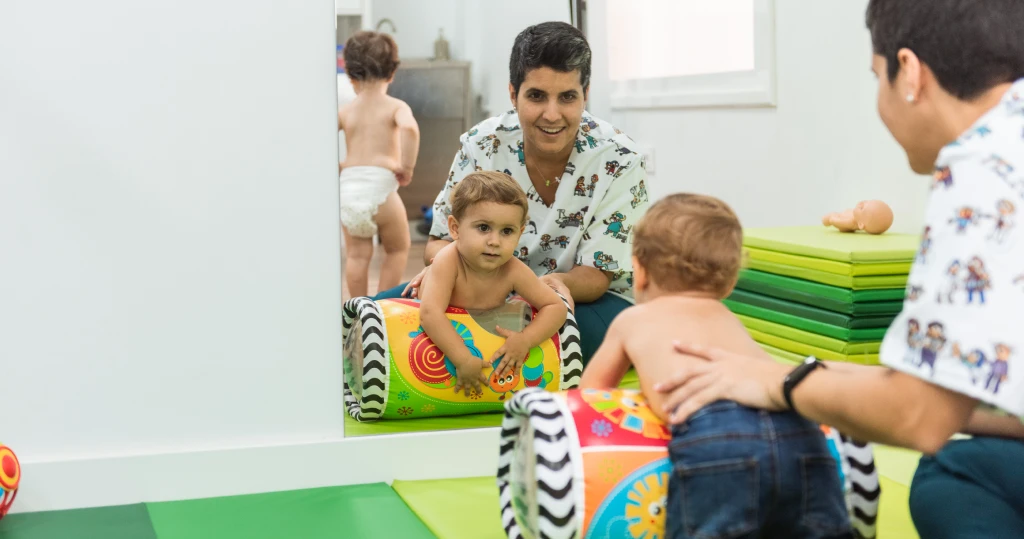
Oculomotor physiotherapy for child development
We often think of vision only as "seeing clearly." However, for a child learning to read, play soccer, or simply maintain their balance, just as important as clarity is the ability to see clearly. oculomotor skills: the ability to move the eyes in a coordinated, precise, and rapid manner.
As a physiotherapist, I work on the oculomotor system because vision is, above all, a motor act.
What is Oculomotor Physiotherapy?
It's the branch of physiotherapy that focuses on evaluating and treating the muscles that move the eyes and their coordination with the neck and the rest of the body. We don't prescribe glasses (that's done by an optometrist or ophthalmologist), but rather We train muscle function and neurological response of the eyes.
How does it affect a child's daily life?
The eyes are the "guides" of movement. If the eye muscles are not functioning properly, the brain receives confusing information, which can lead to:
- Reading difficulties: The child loses his place, skips words, or gets tired very quickly while reading.
- Balance and coordination problems: Since the eyes provide information about our position in space, poor eye movement can cause motor clumsiness or frequent falls.
- Fatigue and headaches: The constant effort to focus on or track an object exhausts the child's nervous system.
Benefits of the intervention in 2026
Current scientific evidence highlights that manual therapy and oculomotor exercises significantly improve academic and athletic performance:
- Improvement of visuospatial attention: It helps the child to better process what they see around them.
- Eye-Hand Coordination: Essential for writing and for ball sports.
- Integration with the cervico-vestibular system: By working the eyes together with the neck, we reduce cervical tension and improve overall posture.
When should you suspect your child needs it?
- If you notice that they move their head a lot to follow an object instead of just moving their eyes.
- If you blink excessively or rub your eyes when performing close-up tasks.
- If you have or have had torticollis or adopt "strange" body positions.
- If you experience dizziness or unsteadiness.
Multidisciplinary work
In my practice, oculomotor physiotherapy is one piece of the puzzle. We collaborate closely with optometrists to ensure that the child not only "sees," but also "understands" and "reacts" correctly to their environment.
Conclusion
Training the eyes is training the brain. If you notice your child is struggling in school or lacks coordination while playing, the key could lie in their eyes.
Would you like to have your child's eye movement skills assessed? Write to me and we'll analyze how we can enhance your development from a vision perspective.
